Multiplication Chart 1–15
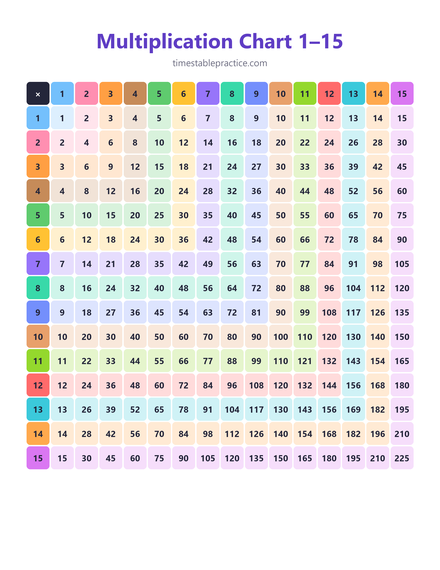
This chart goes up to 15 × 15 = 225. It adds the 13s, 14s and 15s to the classic 12 × 12 grid — handy for 4th and 5th graders, for minutes and quarter hours (15 × 4 = 60), and for checking bigger facts quickly.
Tap any square to see the fact.
| × | 1 | 2 | 3 | 4 | 5 | 6 | 7 | 8 | 9 | 10 | 11 | 12 | 13 | 14 | 15 |
|---|---|---|---|---|---|---|---|---|---|---|---|---|---|---|---|
| 1 | 1 | 2 | 3 | 4 | 5 | 6 | 7 | 8 | 9 | 10 | 11 | 12 | 13 | 14 | 15 |
| 2 | 2 | 4 | 6 | 8 | 10 | 12 | 14 | 16 | 18 | 20 | 22 | 24 | 26 | 28 | 30 |
| 3 | 3 | 6 | 9 | 12 | 15 | 18 | 21 | 24 | 27 | 30 | 33 | 36 | 39 | 42 | 45 |
| 4 | 4 | 8 | 12 | 16 | 20 | 24 | 28 | 32 | 36 | 40 | 44 | 48 | 52 | 56 | 60 |
| 5 | 5 | 10 | 15 | 20 | 25 | 30 | 35 | 40 | 45 | 50 | 55 | 60 | 65 | 70 | 75 |
| 6 | 6 | 12 | 18 | 24 | 30 | 36 | 42 | 48 | 54 | 60 | 66 | 72 | 78 | 84 | 90 |
| 7 | 7 | 14 | 21 | 28 | 35 | 42 | 49 | 56 | 63 | 70 | 77 | 84 | 91 | 98 | 105 |
| 8 | 8 | 16 | 24 | 32 | 40 | 48 | 56 | 64 | 72 | 80 | 88 | 96 | 104 | 112 | 120 |
| 9 | 9 | 18 | 27 | 36 | 45 | 54 | 63 | 72 | 81 | 90 | 99 | 108 | 117 | 126 | 135 |
| 10 | 10 | 20 | 30 | 40 | 50 | 60 | 70 | 80 | 90 | 100 | 110 | 120 | 130 | 140 | 150 |
| 11 | 11 | 22 | 33 | 44 | 55 | 66 | 77 | 88 | 99 | 110 | 121 | 132 | 143 | 154 | 165 |
| 12 | 12 | 24 | 36 | 48 | 60 | 72 | 84 | 96 | 108 | 120 | 132 | 144 | 156 | 168 | 180 |
| 13 | 13 | 26 | 39 | 52 | 65 | 78 | 91 | 104 | 117 | 130 | 143 | 156 | 169 | 182 | 195 |
| 14 | 14 | 28 | 42 | 56 | 70 | 84 | 98 | 112 | 126 | 140 | 154 | 168 | 182 | 196 | 210 |
| 15 | 15 | 30 | 45 | 60 | 75 | 90 | 105 | 120 | 135 | 150 | 165 | 180 | 195 | 210 | 225 |
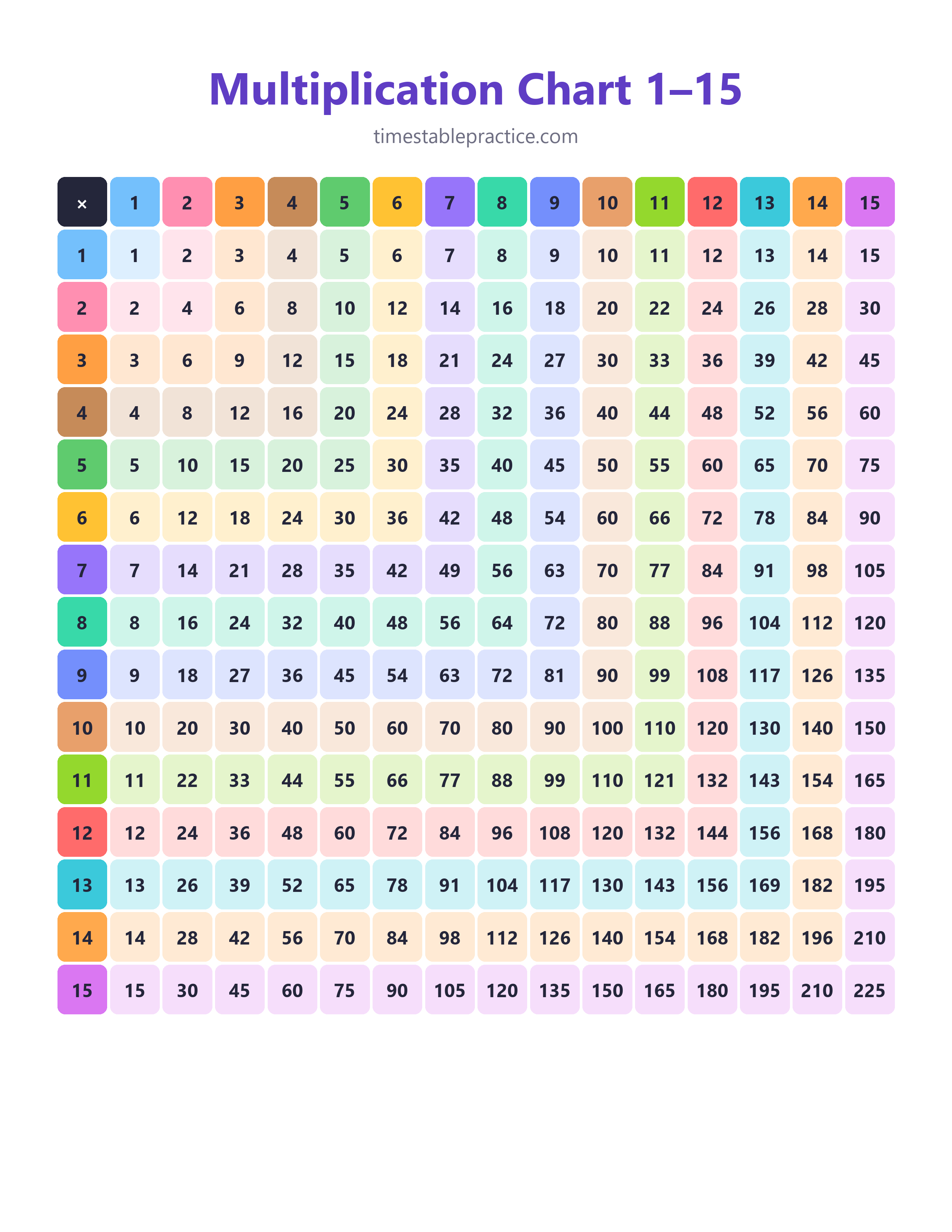
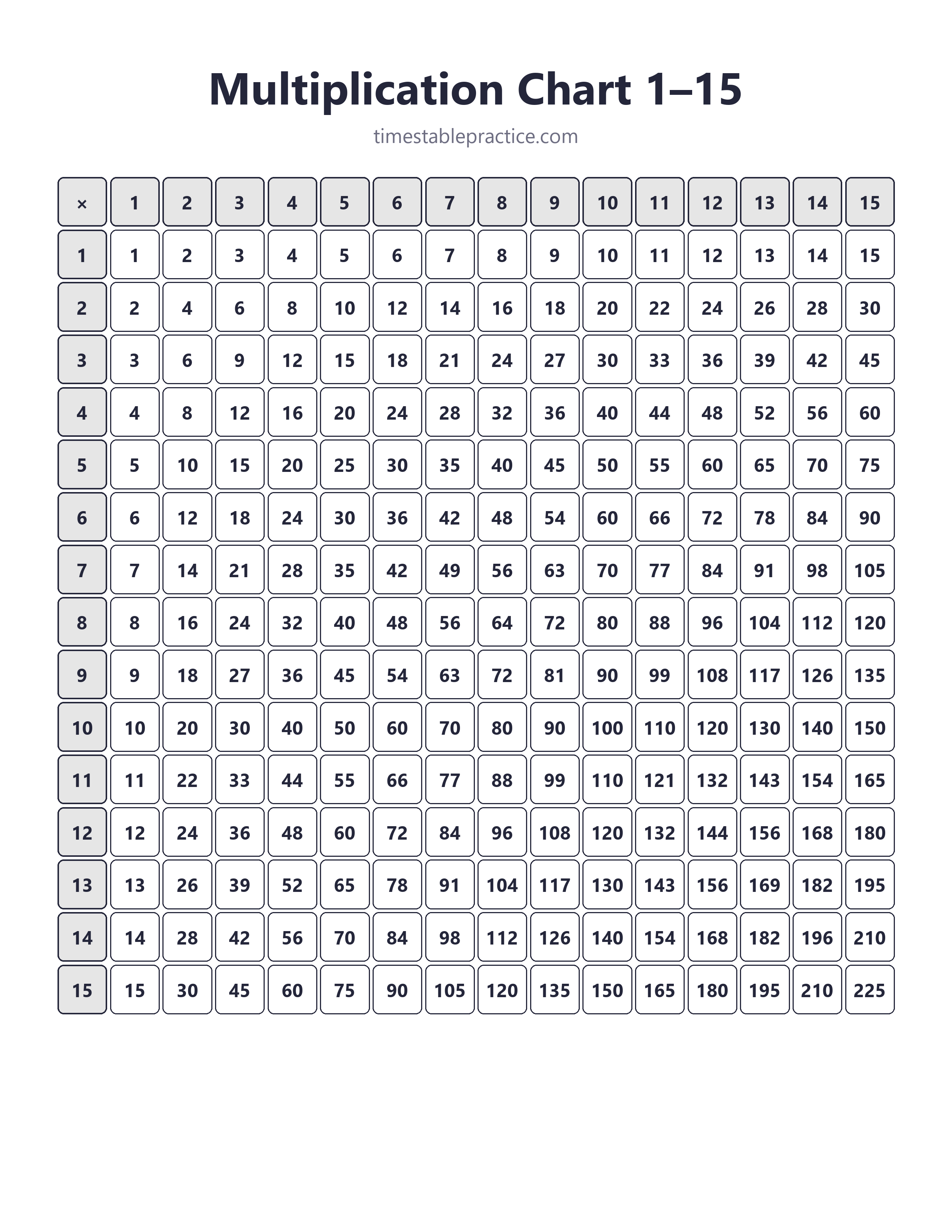
Download the printable multiplication chart 1–15
A ready-to-print US Letter page (it also fits A4). Use the PDF for printing and the PNG for slides, worksheets or a classroom poster.
What the 13, 14 and 15 rows add
The three new rows are easy to build from tables you know: 13 × n is 12 × n plus one more n, 14 × n is double 7 × n, and 15 × n is 10 × n plus half of it. Try them on the chart: 14 × 6 = 84 (double 42), 15 × 7 = 105 (70 + 35).
The new square numbers on the diagonal are 169, 196 and 225. Tricks for each table: 13s, 14s, 15s.
Know the chart? Prove it!
Practice the facts with stars, sprints and a progress map.
Frequently asked questions
How do you read a multiplication chart?
Find one number in the left column and the other in the top row. Slide along the row and down the column — the square where they meet is the answer. For 6 × 8, go to row 6 and column 8: 48.
Can I print this multiplication chart?
Yes. Press Print for a color chart or Print black & white to save ink. The chart fits on one Letter or A4 page; choose “Save as PDF” in the print window to keep a copy.
What is the biggest number on a 15 × 15 multiplication chart?
15 × 15 = 225, in the bottom-right corner.
Why is the multiplication chart symmetrical?
Because multiplication is commutative: 3 × 9 and 9 × 3 give the same answer, 27. Each fact appears twice, once on each side of the diagonal — except the square numbers (like 7 × 7), which sit on the diagonal once.